this article outlines the key points of high availability that should be paid attention to in order to achieve business stability and operational performance optimization when deploying in singapore: how to select a model, at which levels to implement redundancy, how many slas and backup strategies are needed, and how to transform availability into verifiable operational capabilities through monitoring and drills, so as to facilitate quick decisions when actually purchasing singapore cloud servers or designing architectures.
as an important cloud node in asia-pacific, singapore’s network latency and compliance have become key considerations. choosing a targeted solution can ensure stable cross-border access, meet local regulations, and reduce the risk of fault propagation. high-availability solutions can reduce the impact of single points of failure, allowing businesses to quickly recover when problems occur at the computer room, availability zone, or even regional levels.
priority can be given to mainstream cloud vendors (such as aws, gcp, azure, alibaba cloud, etc.) with local availability zones in singapore, as well as local cloud service providers and cdn acceleration nodes. when evaluating, focus on network interconnection, cross-region replication capabilities and local technical support, especially egress bandwidth and backbone interconnection for low latency requirements.
small businesses can use single-region, multiple availability zones (active-passive) combined with automatic failover; medium and large businesses recommend active-active or multi-region deployment to achieve shorter rto/rpo. available database solutions include master-slave replication, read-write separation, and distributed databases; caching and cdn are used to reduce back-end pressure.
the redundancy level is defined based on business importance: non-critical systems can choose n+1, and critical systems should achieve multi-availability zone or multi-region redundancy. the sla target can be set to 99.9% (level three available) or 99.99% (level four). at the same time, rto (recovery time objective) and rpo (recovery point objective) are clearly defined, and monitoring data is used to verify whether the standards are met.
optimization from the architectural perspective includes the use of load balancing , automatic expansion and contraction, read-write separation, and off-site backup; from the operation and maintenance perspective, performance baselines, stress testing, and capacity planning are required. introduce observation platforms (metrics, logs, distributed tracing) to locate performance bottlenecks, and use caching, connection pools, and cdn to reduce back-end load.
properly weigh credibility and cost: use on-demand or preemptible instances for non-critical traffic to save budget, and use reserved/subscription instances for key nodes to ensure stability. adopt tiered storage and hierarchical backup, and use controlled degradation strategies to prioritize core services in extreme situations.
establish a complete monitoring and alarm system and define quantifiable indicators (availability, delay, error rate). conduct regular fault drills (fault injection/drill scripts, disaster recovery drills) and update the emergency manual (runbook). the results of the exercise should be incorporated into the sla review and resource adjustment plan.
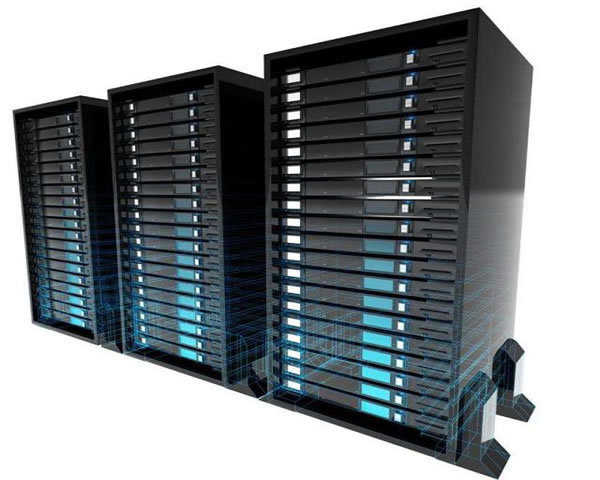
high availability must go hand in hand with security strategies: cross-region data replication needs to be encrypted, access control and key management need to be unified, and compliance requirements (such as data sovereignty) will affect multi-region deployment choices. incorporate backup, auditing, and recovery processes into availability assessments to ensure that security constraints do not impede recovery in the event of a failure.
- Latest articles
- Popular tags
-
Comparison Of Experience And Price/performance Ratio Of Singapore Jiakuan Vps
this article will deeply discuss the usage experience and cost-effectiveness comparison of singapore jiakuan vps to help users make a wise choice. -

A Full Analysis Of The Regulations And Precautions For Leasing Singapore Cloud Servers
this article provides a comprehensive analysis of the leasing regulations and precautions of singapore cloud servers to help users make wise choices. -

Explore The Market Prospects And Choices Of Vps Brands In Singapore
this article explores the market prospects and selection of vps brands in singapore, and provides detailed operating steps and practical guidelines.